SUPPORTER INSTUTIONS


*Members listed alphabetically by surnames.
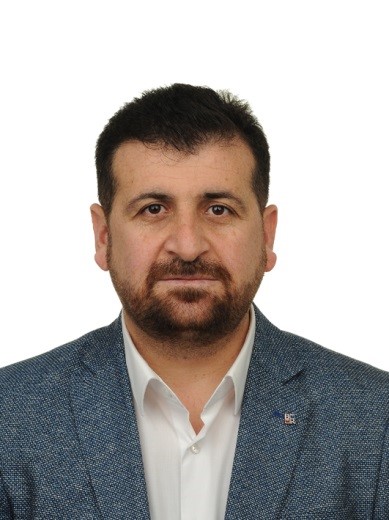
Dr. Husnu Gerengi is a professor in the Department of Mechanical Engineering at Duzce University in Turkey. He is the one of the representative members of Turkey in the International Corrosion Council (ICC) since 2015.
His subject expertise and focus is on corrosion, corrosion control, corrosion-resistant materials and corrosion inhibitors – principles and mechanisms. He is the first researcher who used Dynamic Electrochemical Impedance Spectroscopy (DEIS) method in corrosion inhibitor studies. He investigates the long term evolution of impedance in a corrosion cell on adding an inhibitor. Through this technique, he can quantify and qualify the effectiveness of inhibitors and coatings. Besides corrosion, he has research interests in plastic and rubber material technology, also plastic and rubber additives. His dynamic and well-equipped laboratory has currently become a knowledge and research centre for many postdoctoral researchers, doctoral students, masters and bachelor’s degree students.
Corrosion-resistant steel, Al, Cu and brass alloys, Mg-based bioresorbable medical implants and corrosion-resistant construction materials are some of the ongoing topics for research in his laboratory. He has given numerous invited lectures at many national and international conferences as well as he has authored more than 55 SCI scientific papers in high impact journals. He has seven ongoing patents to his credit based on boron-doped corrosion inhibitors.
Since September 2020, he has been working on biodegradable implants as a visiting professor in Bergamo University, Italy.
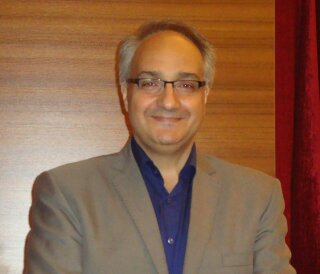
Dr. Javaherdashti has a background in materials science and metallurgical engineering. He has been involved in more than 400 corrosion management projects in various industries including oil & gas and power plants worldwide. Leading author of eight books published by publishers such as Springer, CRC Press, Elsevier and recently Wiley, Dr. Javaherdashti has authored several research papers and root cause analysis reports. His expertise is in corrosion management, Microbial corrosion (MIC), mathematical modelling and future studies.
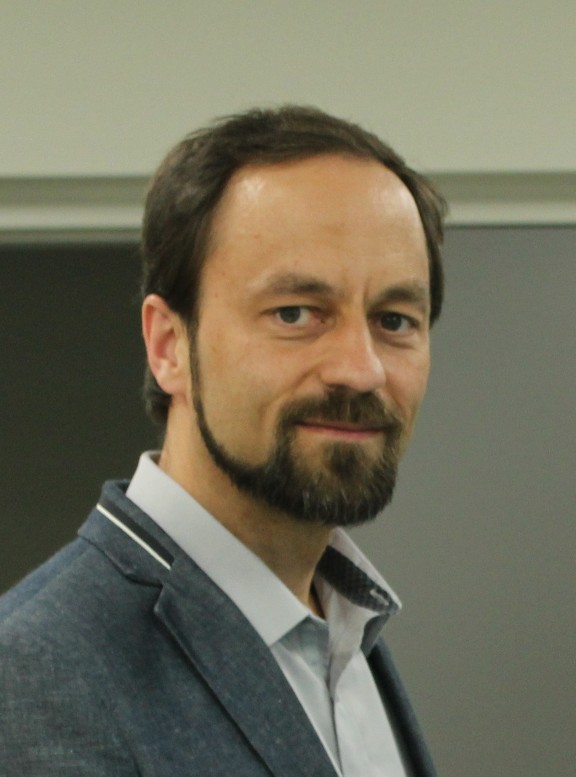
Tomáš Prošek graduated at the University of Chemistry and Technology in Prague in 1996. From 2001 until 2015, he worked at Swedish Corrosion Institute in Stockholm, Sweden and at Institut de la Corrosion in Brest, France. He was responsible for construction, building and infrastructure activities with focus on atmospheric corrosion of galvanized and coil-coated steel materials.
From January 2016, he is leading the Department of Metallic Construction Materials in Technopark Kralupy of the University of Chemistry and Technology in Prague.
His research focuses on corrosion protection by metallic and organic coatings, atmospheric environmentally assisted cracking, outdoor and accelerated corrosion testing and corrosion monitoring.
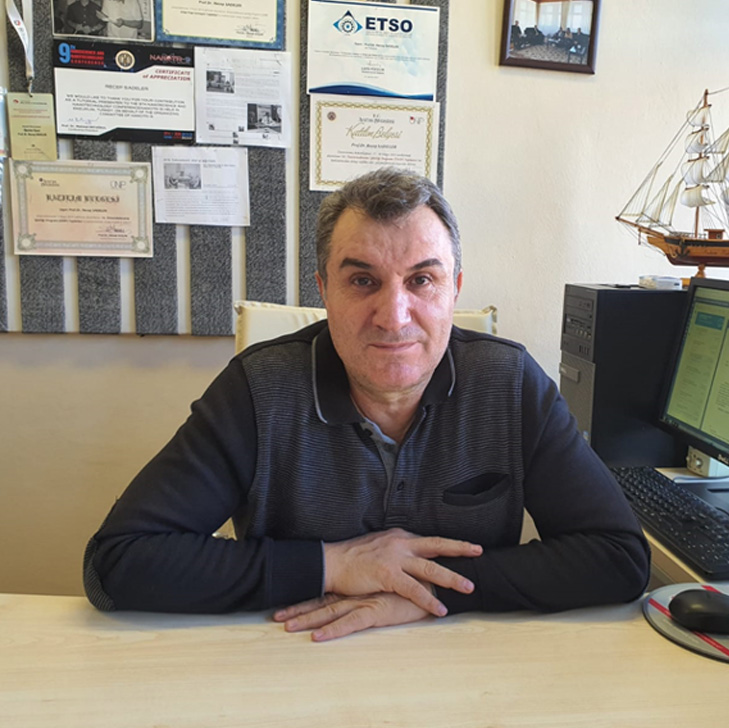
Faculty member of Atatürk University, Faculty of Engineering, Mechanical Engineering Construction and Manufacturing.
He graduated from Karadeniz Technical University Mechanical Engineering Department. He graduated from Atatürk University Mechanical Engineering Department in 1997 and completed his PhD in 2002. He has been working as a professor at the same university for seven years.
Professor Dr. Recep Sadeler has been involved in many national research projects and has many international articles.
Areas of work: Material Fatigue, Corrosion Fatigue, Fretting Fatigue, Impact Corrosion, Mechanical Surface Treatments, Thermal Surface Treatments, Abrasive corrosion with two and three bodies, Mechanical behavior of biomaterials.
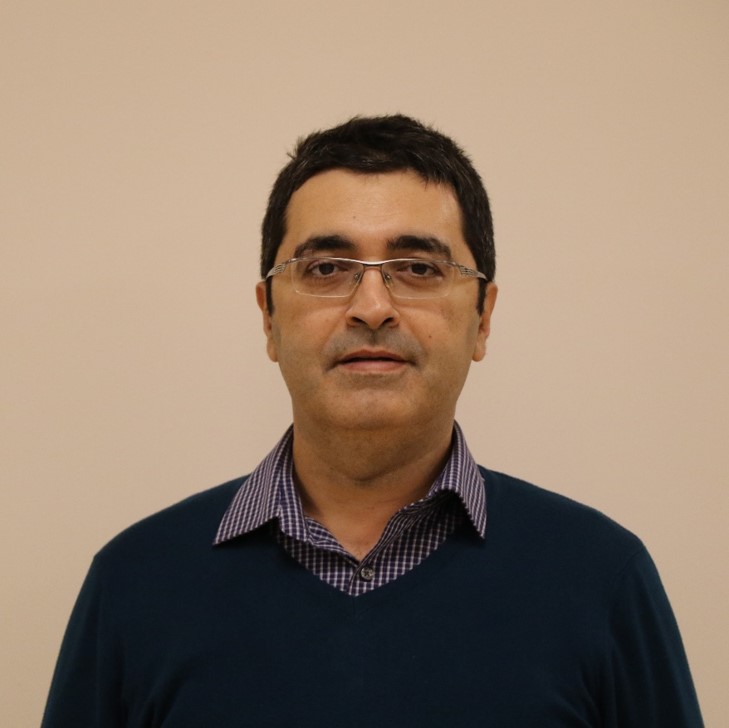
Graduated from Istanbul Saint Benoit French High School, Bogazici University Civil Engineering undergraduate and graduate.
He received his PhD on the effect of concrete-steel interface defects on reinforcement corrosion in INSA de Toulouse, France. Within the scope of the EU 5th Framework Program, he did post-doctorate on corrosion inhibitors in Ireland UCD.
During his years at Istanbul Kultur and Yeditepe Universities, he carried out TÜBİTAK projects jointly with Boğaziçi University on the corrosion resistance of fiber concretes and corrosion resistance of cracked concrete containing steel fiber, respectively. He has carried out a BAP project on the corrosion resistance of cracked concretes containing fly towers at Gebze Technical University, where he currently works. T 1404 in the framework of COST Action, Europe, USA and Japan attended the 45 simultaneous laboratory experimental study, one researcher has taken place as representing Turkey, has delivered the complete test results. Course and research topics are material science, building materials, durability of structures, concrete technology and non-destructive inspection techniques.
He is an active reviewer in many leading international journals in his field.
Since his graduation as a metallurgical engineer Mr. T.I. Török has been working for University of Miskolc Hungary. First he worked at the Department of Physical Chemistry and spent also a longer research period in the Department of Chemistry of Kyoto University in Japan.
His PhD studies concentrated on transport and volumetric properties of aqueous chloride salts and HCl solutions, then he turned his research interest to surface engineering topics related to metallurgy and finished metal products.
At the Faculty of Materials Science and Engineering he also established a Laboratory for Surface Treatments/Technologies within the Institute of Metallurgy. During the past he also served for several years as Hungary Chapter Chairman of ASM (American Society of Metals) International, and later became an elected member of several managing bodies of the European Federation of Corrosion (EFC) representing his home corrosion society (HUNKOR).
Working with his PhD students Professor Török’s most recent research activities embrace topics like hot dip color galvanizing, aluminizing, aqueous surface treatments (electroless and electroplating of metal parts) in part as preventive measures against corrosion.
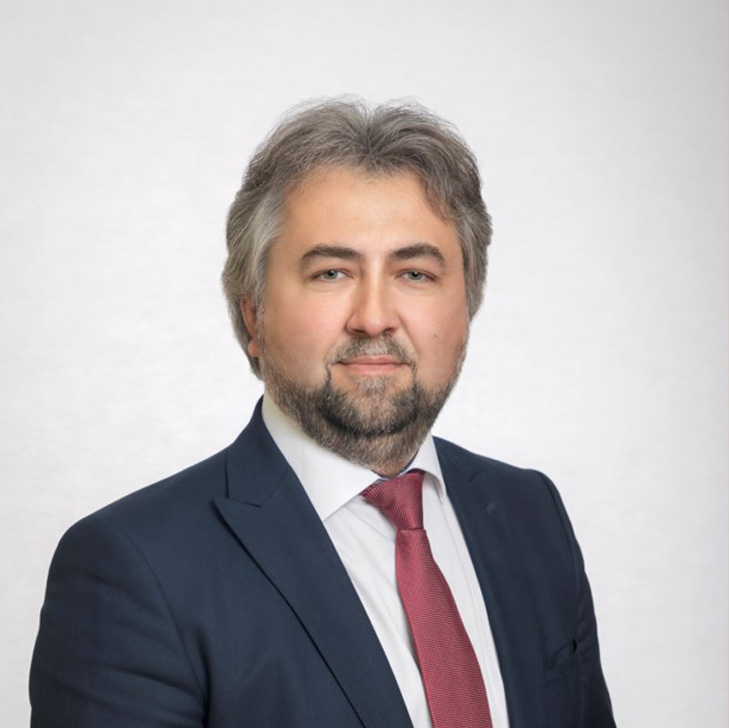
Prof. Mikhail Zheludkevich is currently Head of Department of Corrosion and Surface Technology at Helmholtz-Zentrum Geesthacht, Germany. He is also professor in University of Kiel.
In 1998 he graduated with distinction from the Belarusian State University and in 2002 took his PhD degree in Physical Chemistry at the same University. His main scientific focus is on multi-functional surfaces and active corrosion protection of light materials and multi-material systems.
Prof. Zheludkevich has published more than 220 ISI papers, 15 book chapters, has presented more than 50 plenary and key-note talks at international conferences and is co-inventor in 12 patent applications. His research works are well recognised by the community as indicated by achieved H-index – 54 and Tajima price awarded by the International Society of Electrochemistry in 2016. He is member of technical group in Research Fund for Coal and Steel and is vice-chairman of Aerospace Working Party at European Federation of Corrosion.


| Mobile | : +90 542 288 96 77 |
| Phone | : +90 216 474 31 35 |
| : yesimgures@tucsa.org | |
| Web | : www.tucsa.org |
| Mobile | : +90 542 288 9677 |
| Phone | : +90 216 474 31 35 |
| : science@caspconferences.com | |
| Web | : www.tucsa.org |


